Furnace Replacement in Toronto When You Want to Keep Your Central Air Conditioner
Only have 30 seconds?
- Use the FurnaceFor.homes homeowner guide to find related furnace planning information.
- Ask the installer to identify the indoor cooling coil as well as the outdoor unit.
- Get the retained equipment, required changes and any deferred testing written into the quote.
- Before signing off, get a record of what the installer verified and a date or trigger for any return visit.
Why a furnace job can affect your air conditioning
In many Toronto houses, a central air conditioner has two main pieces. The outdoor cabinet contains components that release heat outdoors. An indoor coil sits in the path of air moving through the ducts. The furnace blower moves household air over that coil during cooling. That arrangement means a furnace replacement can change the equipment that moves the air even when the outdoor air conditioner remains in place.
The owner usually sees two boxes at different times of year. In winter, the furnace appears to do all the work. In summer, the outdoor unit makes its presence known. The connection between them can be easy to miss when the furnace is located in a basement and the condenser is beside the house. During a replacement estimate, ask the installer to show you where the indoor coil is located and explain how it fits into the proposed work. Keep that conversation at the equipment level, with the technician handling any inspection that requires opening a cabinet.
This planning is most useful before the furnace order is placed. A system can have physical constraints, a particular control arrangement or cooling airflow requirements that affect the furnace selection. Once the equipment arrives, a change may require a different model, a revised work order or a later appointment. Raise the question while the installer can still check conditions and explain which parts of the job depend on retaining the cooling system.
Take inventory of the entire system
Start by telling the quoting company which equipment you want to retain and why. You may have replaced the air conditioner recently, or it may still be operating well enough that a separate cooling purchase can wait. Share any records you have, including the original invoice, model names and earlier repair notes. If you remember that the cooling has struggled on especially hot days or shut off unexpectedly, describe that history before the installer writes the scope.
Ask the technician to identify the current furnace, indoor coil, outdoor unit and thermostat on the quote. If information is missing from the paperwork, the technician can locate it from the equipment where accessible. Ask whether the quote also accounts for nearby accessories, such as a humidifier or an air cleaner, if you have them. Compatibility should be determined for the equipment at your address. An invoice that mentions only the outdoor brand leaves the indoor side of the job open.
Suppose a homeowner has a recent outdoor unit receipt but the receipt gives no indoor coil model. The useful next step is to ask the installer to check the coil and explain whether it was part of that earlier work. The homeowner can then evaluate a written plan based on actual components. This also helps if one company proposes leaving the coil in place and another recommends replacing it. Have each company explain what it observed and how the observation affects its recommendation.
Ask how the indoor coil will fit
The physical fit can matter when an indoor coil is mounted just above a furnace in a basement with a low ceiling. A new furnace may have different cabinet dimensions. The space used to connect equipment to the existing ductwork can be short, especially where the ceiling, joists or another service limits access. Ask whether the installer can retain the coil in place, whether it needs to be repositioned and what change, if any, is included in the quote.
A technician should explain how the coil and nearby connections will remain accessible to service after the furnace is installed. You can ask where the technician expects to reach the filter and where future service personnel would reach the coil and its drain. If a proposed transition or enclosure makes the layout hard to picture, request a simple sketch or a photograph marked up by the installer. An owner can understand the space implications without having to design the installation.
Ask what happens if the installation team finds a fit problem that was hidden during the estimate. Get the process for a written change before work proceeds. If the quote assumes the cooling coil can stay without any change, ask which conditions support that assumption. A different answer from a second contractor can be worth discussing before choosing a start date. The furnace quote questions guide can help you collect those answers in one place.
Discuss airflow and controls separately
Ask how the installer will confirm that the new furnace can provide the airflow required for the existing cooling equipment. The installer needs to consider the existing ducts, filter arrangement and coil along with the new blower. Heating requirements and cooling requirements both belong in the conversation. If you are comparing equipment sizes, the furnace sizing guide explains what to ask about heating capacity as a separate part of the selection.
Then ask what will happen with the thermostat. Some homes have a straightforward thermostat with separate heating and cooling commands. Others have additional stages, accessories or manufacturer-specific controls. Tell the installer about features you use, such as a weekly schedule or remote access, and ask which features the proposed combination supports. If the thermostat is being replaced, have the selected model and setup included in the quote.
You can also give the technician a short history of how rooms behaved during the last cooling season. If the second floor was hot every afternoon or the house became uncomfortable before the outdoor unit stopped, mention what you observed. Ask whether the furnace replacement changes anything relevant to that concern or whether it would need separate diagnosis. Getting the pre-existing condition written down helps when you call about cooling after the job.
Put drainage and responsibility in the work order
An indoor cooling coil can collect moisture during air conditioning. The technician should account for where that water goes and explain whether anything about the drainage will change. Depending on the existing arrangement and the replacement furnace, the basement may have several drainage connections serving different equipment. A short explanation during the estimate helps you distinguish what was already there, what will be retained and what the installer plans to change.
For the same reason, ask who will be responsible for any cooling-side work if the original plan changes. The estimate should explain whether the furnace installation includes work on the retained air conditioner and how another visit would be handled if it does. If the air conditioner has its own warranty or service agreement, check those documents and ask what records each company needs. A homeowner who hired different companies in different years can avoid confusion by keeping both invoices and giving the quoting installer the model record from the earlier work.
Plan the handover around Toronto weather
When a furnace goes in during a cold spell, ask which checks the installer can complete on the day and whether normal cooling operation should be tested later under appropriate outdoor conditions. The installer should make that decision for the particular equipment and conditions. Ask for the deferred checks to be named in writing. A start-up sheet from the heating visit can then sit alongside a record of any planned cooling verification.
Settle the logistics before installation day. If a cooling-season return visit is included, ask who initiates it, how soon it should take place once weather permits and whether there is a charge. If someone else will be managing the house by spring, record the office contact and the equipment details. This is especially useful when a property changes tenants or is handed from one manager to another between heating and cooling season.
At the handover, ask the installer to explain the new thermostat settings and show you the accessible filter location. Ask for the furnace and air conditioner details to be recorded together, including which equipment was retained. If the cooling side requires later verification, keep that note somewhere easy to find. When warm weather arrives, you will have a specific instruction and a contact instead of having to reconstruct the installation conversation.
Give the installer a location and an access plan
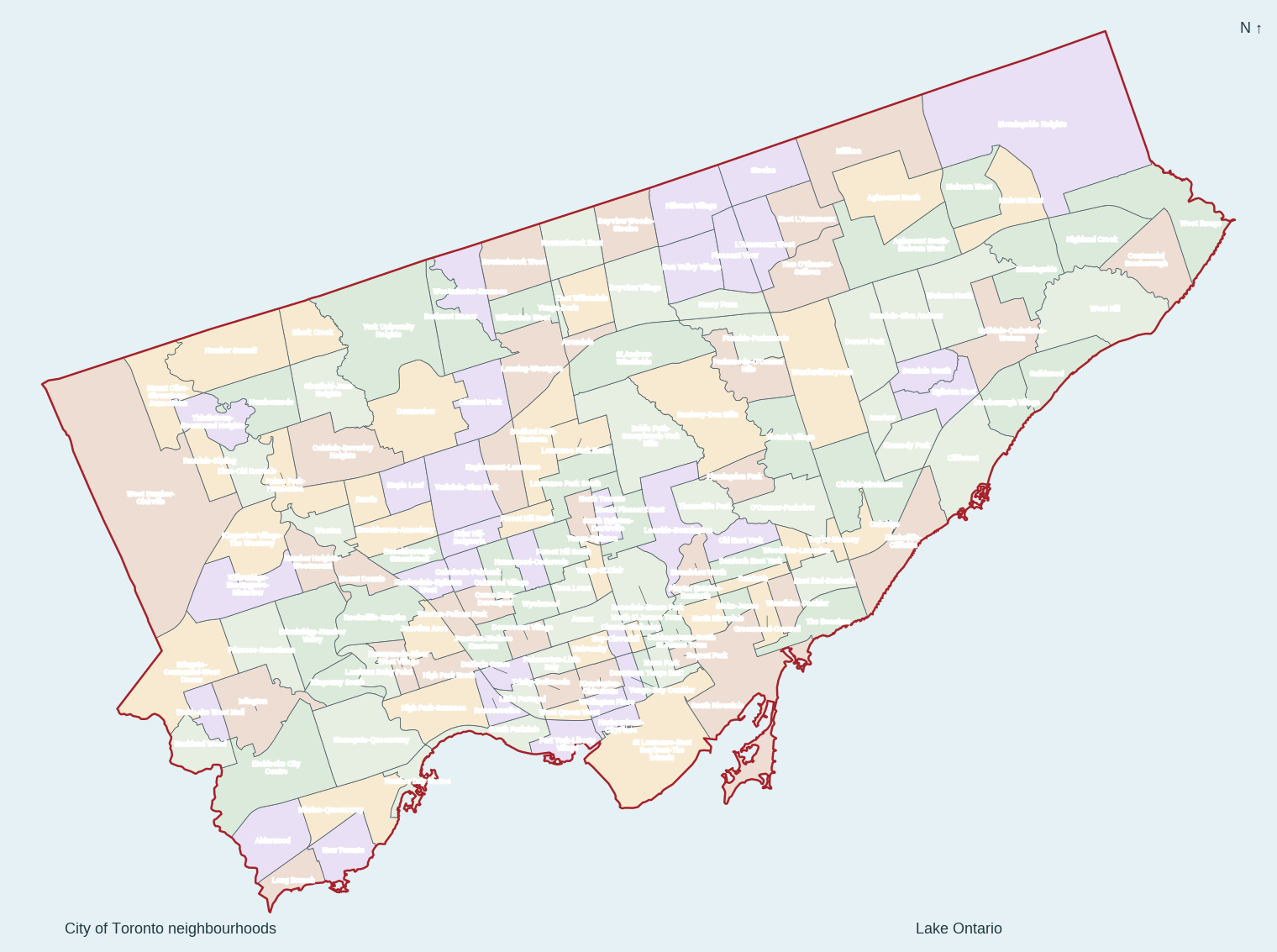
The City of Toronto map above shows the neighbourhoods in their citywide context. An address near Dundas Street West and Keele Street in the Junction calls for different routing details from a home near Kingston Road and Midland Avenue in Scarborough. Give the contractor the complete address and postal code. Add the nearest suitable approach if an alley, one-way street or rear entrance changes how they should reach the basement or the outdoor equipment.
- Parking and unloading. Identify the available driveway, loading area or legal curb option. Tell the installer whether materials need to be carried from a different street or through a shared lane.
- Accessible entry. Describe the door and route to the furnace and note steps, narrow turns and any key or gate arrangements. Confirm who can meet the crew.
- Outdoor equipment. Identify which side of the property holds the outdoor air conditioner. Tell the contractor if access crosses a locked yard or an area shared with the neighbouring unit.
- Managed properties. Confirm who can authorize changes and which notices or access arrangements need to be handled before the crew arrives.
Check the finished scope against the quote
Read the completed work order with the original scope beside it. Look for the new furnace model, the retained cooling equipment, changes to the controls or nearby connections and the checks the installer recorded. Where work was deferred, ask for the next action and the person responsible for it. When the house has another heating or cooling issue later, the paperwork will help a technician establish which components were originally present and which work was added during the replacement.
If you plan to keep your central air conditioner through a furnace replacement in Toronto, carry one question through the estimate, installation and handover. How will this work with the cooling equipment already in the house? A clear written answer says what stays, what changes, what the installer tested and when any remaining test will happen.